
Q1 2026 Newsletter

Message from Co-Founders
The last quarter has been a period of exciting growth at LABRI, marked by two particular milestones.
First, we hired our first team mate, Bernard, in the Philippines and then quickly hired another, Beth, in the UK. Bringing on these new team mates marks an important shift in focus from us, from (for most of 2025) research and idea development to implementation and engagement. It has also already brought a new burst of energy and ideas to the organisation, which seems fitting for the start of a new year!
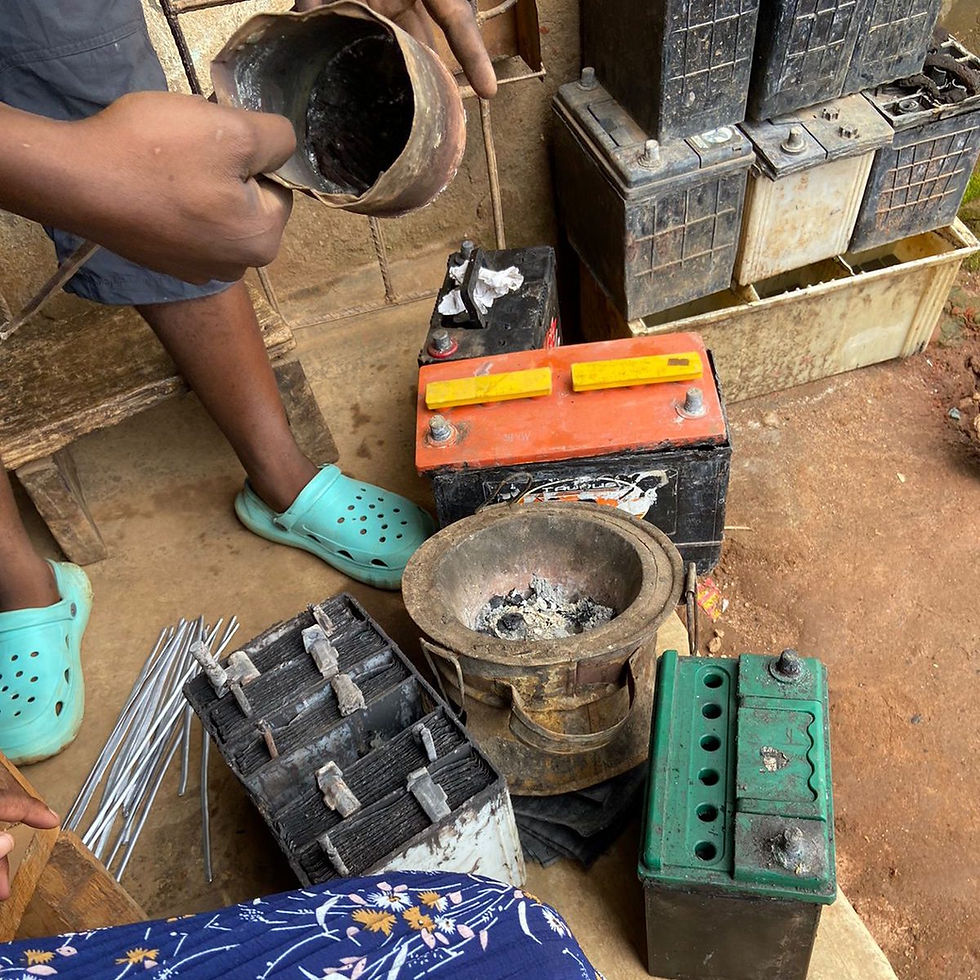
Second, we started expanding our work to a second country. Micaella and Beth have just completed a scoping visit to Malawi to understand the used lead-acid battery market there and how LABRI might be able to contribute. We expect to make a decision about future work in Malawi by the end of March.
Many thanks,
Tom and Micaella
Working in Malawi
In February, Beth and Micaella visited Lilongwe and Blantyre, where they met with representatives from six government ministries and departments, as well as civil society organisations and researchers working across health, environment, and trade. They also engaged with battery retailers and repair workers to better understand how the market operates. They returned last week and are now reviewing their findings to determine next steps.

Working in the Philippines
Our work in the Philippines has increasingly focussed on scoping an extended producer responsibility (EPR) scheme for lead-acid batteries. An EPR scheme makes manufacturers and importers legally responsible for the collection and recycling of the lead-acid batteries they produce. EPR schemes have worked effectively across various contexts (for example, for ULABs in Brazil). We have chosen to focus on an EPR scheme, in particular, based on feedback from relevant industry and government stakeholders and because the Philippines already has an EPR scheme in place for plastics packaging.
We have continued to make steady progress in our engagement in the Philippines. We have now started two projects in collaboration with policy-adjacent stakeholders to evaluate and scope an EPR scheme. Tom visited Metro Manila during January 2026 to on-board Bernard, meet with our partners and engage with other civil society, government and multi-lateral institutions.
Other activities
Presenting our work at EAGx Singapore

In late November 2025, Tom attended and delivered a presentation about our first few months at LABRI at the EAGx conference in Singapore. This was a wonderful opportunity to reflect on the process that we had been through to start LABRI, and it was heartening to see so much curiosity about our work among attendees.
Global research
As well as engagement work, we have been working with research volunteers to complete a number of relevant projects to support our engagement activities in the last three months:
With Anaeli Victoria Razo, a comparative review of policy frameworks for management of hazardous waste across various ASEAN countries;
With Gerwin Pol, a summary of the impact of extended producer responsibility schemes on collection and recycling rates;
With Munara Moldobaeva, a summary of the impact of deposit schemes on collection and recycling rates; and
With Kowshik Thota and Kunal Peety, a refresh of our geographical assessment to support our future decisions about where to prioritise for further scoping visits and expansion.
These projects have already proved very helpful for us as we engage with and support government actors, and we hope to turn some of them into public materials in the coming months. We are grateful to Munara, Anaeli, Gerwin, Kowshik and Kunal for their support and professionalism.
Looking ahead
As well as continuing our core engagement activities in the Philippines and in Malawi, we are also planning a project with Action for Economic Reform to assess the economic effects of unsafe used lead-acid battery recycling in the Philippines and the potential benefits and costs of an EPR scheme.


